 Skip to content

Whitelisting on social media is a marketing strategy where a brand gains permission from an influencer or content creator to run paid ads using their social media profiles. The brand essentially boosts or promotes content through the influencer’s handle, allowing the ad to appear as if it’s coming directly from them. This approach combines the authenticity and trust that influencers have built with their audience, while giving brands control over targeting, budget, and performance tracking.
Unlike traditional ads that brands create and post on their own profiles, whitelisting gives brands the unique opportunity to use content created by the influencer. This helps the brand reach a larger, more engaged audience by leveraging the influencer’s credibility. It’s a strategy that blends organic content with paid promotion, making ads feel more natural and less intrusive.
Whitelisting is an essential tool for marketers looking to tap into the power of influencer relationships while ensuring their campaigns are targeted, scalable, and effective.
What Is Whitelisting on Social Media?

Whitelisting is when a brand gets permission from an influencer to use their social media account for paid ads. The brand promotes content through the influencer’s profile, making the ad appear as if it’s coming directly from them. This allows brands to reach a targeted audience while maintaining the authenticity of the influencer’s content.
By using whitelisting, brands can control the ad’s targeting and performance, reaching people most likely to engage. It helps amplify the influencer’s content without disrupting their feed, ensuring the ad feels more like a natural recommendation than a traditional promotion.
Types of Whitelisting
Direct Whitelisting
In direct whitelisting, the brand boosts content created by the influencer using their handle. The ad appears on the influencer’s feed, making it look like an organic post. This type of whitelisting helps maintain the authenticity of the content, while allowing the brand to expand its reach and target specific audiences through paid promotion.
Permission-Based Whitelisting
With permission-based whitelisting, the brand gets explicit permission from the influencer to use their content or likeness for ads. Unlike direct whitelisting, this method gives the brand full control over the ad’s narrative, targeting, and optimization. It allows the brand to tailor the content and ensure it reaches the right audience while still benefiting from the influencer’s credibility.
Why Whitelisting Is Important
As social media continues to evolve, paid amplification is becoming a key strategy for brands looking to cut through the noise. With so much content being shared on platforms like Instagram, TikTok, and Facebook, organic reach, meaning the number of people who naturally see a post without any paid promotion, has significantly declined. What worked a few years ago, like relying on influencer content to drive engagement, no longer guarantees the kind of visibility it once did.
Brands are realizing that to truly stand out, they need to amplify their content beyond organic reach. Simply posting on social media isn’t enough anymore. With paid amplification, especially through methods like whitelisting, brands can target the right audiences with precision, ensuring that their content reaches people who are likely to engage or convert.
Whitelisting helps brands bypass the limitations of organic posts by allowing them to take influencer-created content and promote it to a wider audience. This shift from relying on unpaid posts to using paid strategies gives brands the opportunity to maximize their visibility and drive better results from their influencer campaigns. Whitelisting ensures that the content continues to resonate authentically while benefiting from the scale and targeting that paid ads offer.
Ultimately, whitelisting is not just a luxury anymore, it’s a necessity for brands who want to stay relevant, engage with their audience, and convert those interactions into tangible results.
How Does Whitelisting Work?
Whitelisting involves a simple process of collaboration between brands and influencers. Let’s break it down step by step:
Step-by-Step Process of Setting Up Whitelisting Campaigns
Whitelisting is straightforward once you understand the steps involved. Here’s how it works:
1. Influencer Content Selection
The first step is to choose the right content. Look for high-performing, authentic posts that already resonate with the influencer’s audience. These are typically the posts that received strong engagement or feedback. The idea is to use content that feels natural and genuine, so it doesn’t appear overly promotional.
2. Requesting Permissions
Next, the brand needs to get permission from the influencer to use their content. This is typically done through social media platforms like Facebook’s Ads Manager, Instagram Business Manager, or TikTok Ads. Influencers can grant access by adding the brand as a partner in their account settings, allowing them to use the content for paid promotion.
3. Running Ads
Once access is granted, the brand can boost the influencer’s post or create targeted ads using the influencer’s account. These ads can be shown to a broader audience, helping the brand reach potential customers beyond the influencer’s follower base while maintaining the authenticity of the original post.
Platform-Specific Guidance
Instagram & Facebook
For both Instagram and Facebook, whitelisting campaigns are set up through Meta Business Manager. The influencer needs to link their Instagram or Facebook account to the brand’s business manager, giving the brand permission to boost content or run ads. This process ensures that the brand can control the campaign while still using the influencer’s handle for the ads.
TikTok
TikTok simplifies the process a bit. Influencers can provide brands with an authorization code through the app, which allows the brand to boost the content or create ads directly from the influencer’s profile. This process is quick and helps brands amplify influencer-created content without needing to post it publicly on the influencer’s feed.
Types of Whitelisting Ads
Boosting Branded Content
One of the most common types of whitelisting is boosting branded content. This involves taking content that an influencer has already posted and amplifying it with paid ads. The brand can then promote the post to a wider audience, beyond just the influencer’s followers. This is a great way to extend the reach of content that’s already performing well.
For example, an influencer might share their personal experience with a product. The brand then boosts this content to not only target the influencer’s followers but also new lookalike audiences who might be interested in the product. This allows brands to reach fresh, relevant eyes without creating brand-new content from scratch.
Dark Posting
Dark posting is a slightly different approach where influencer content is used purely for ads, but it doesn’t appear on the influencer’s feed. These ads are highly targeted, only appearing in the newsfeed of specific users who match the brand’s ideal audience.
For instance, a brand could take a TikTok video created by an influencer and turn it into a dark post. The ad would be shown to a specific group of people but won’t clutter the influencer’s profile. It’s a great way to run targeted campaigns without disrupting the influencer’s organic content.
Partnership Ads
Partnership ads represent a deeper collaboration between a brand and an influencer. In this setup, the influencer posts content on their profile, but the brand also promotes it using their ad system. This allows both the influencer and the brand to benefit from performance tracking and campaign optimization, ensuring that both parties can see how well the content is doing.
The key benefit of partnership ads is that they offer a more transparent way of collaborating. The brand can optimize the content, while the influencer retains control over how the post appears on their feed. It’s a win-win for both sides.
Allowlisting (Advertiser Access)
Allowlisting, also known as advertiser access, is the most comprehensive form of whitelisting. Here, the brand is granted full access to the influencer’s social media content, without the need for the influencer to post it publicly. This means the brand can use any of the influencer’s past content across various campaigns, giving them total flexibility to run ads without interrupting the influencer’s feed.
With allowlisting, the brand has the ability to create custom audiences and target the content in ways that best align with their campaign goals. It’s an incredibly powerful tool for brands looking to leverage the influencer’s content to reach broader or more specific audiences.
Benefits of Whitelisting for Brands
Enhanced Authenticity
One of the key benefits of whitelisting is the authenticity it brings to paid ads. By using the influencer’s content and voice, brands can ensure that their ads feel less like traditional promotions and more like organic recommendations. The influencer’s followers are used to the style and tone of the content, making it feel natural, even when it’s sponsored. This helps the brand connect more genuinely with the audience, building trust in a way that branded content alone often can’t.
Better Return on Ad Spend (RoAS)
Whitelisting is an excellent way to maximize Return on Ad Spend (RoAS). By boosting content that’s already proven to resonate with an audience, brands can improve engagement and reach. This strategy targets both the influencer’s followers and lookalike audiences, expanding the brand’s reach to potential customers who are more likely to engage. As a result, brands often see a significant drop in Cost per Acquisition (CPA), making their campaigns more cost-effective and efficient.
Scalability and Flexibility
Whitelisting provides brands with the scalability and flexibility they need to test and refine campaigns. By using content from multiple influencers, brands can run ads across different profiles and audiences, experimenting with various messages and approaches. This helps brands identify what works best and optimize for maximum conversions. With whitelisting, the process of scaling campaigns becomes easier, allowing for greater reach without the need to create entirely new content for each campaign.
Improved Targeting
Another major benefit of whitelisting is improved targeting. Through whitelisting, brands can use audience segmentation to precisely target the right people. They can leverage the influencer’s data, such as age, location, and interests, to ensure that their ads are shown to the most relevant audience. This targeted approach makes campaigns more efficient, as brands can directly reach individuals who are likely to be interested in their products or services, improving the overall performance of the campaign.
Benefits of Whitelisting for Influencers
Increased Exposure and Audience Growth
One of the major benefits of whitelisting for influencers is the increased exposure they gain. When a brand boosts their content, it’s not just reaching their own followers, it’s also being shown to new audiences through targeted ads. This expansion leads to more eyes on their content, increasing both engagement and the potential for follower growth. By partnering with brands for whitelisting, influencers can build their reach beyond organic growth, attracting people who may not have discovered them otherwise.
Higher Compensation
Influencers can also command higher fees when they allow brands to use their content for paid ads. This creates an additional revenue stream that goes beyond sponsored posts. Since brands are leveraging the influencer’s audience and credibility to boost their reach, influencers often receive compensation that reflects the added value. This not only makes whitelisting financially beneficial but also allows influencers to make the most of their content in a way that boosts their earning potential.
Content Longevity
Another advantage of whitelisting is the longevity it gives content. Unlike organic posts, which often have a short lifespan, whitelisted content continues to perform well as it’s amplified through paid ads. This extended reach helps keep the content relevant and impactful, allowing influencers to see ongoing engagement from the brand’s audience. By boosting high-performing content, influencers ensure that their work remains in the spotlight for longer, providing lasting value to both themselves and the brands they collaborate with.
Key Differences Between Whitelisting and Other Social Media Marketing Strategies
Understanding the unique aspects of whitelisting helps you choose the right strategy for your marketing goals. Here’s how it compares to other methods:
Whitelisting vs Brand-Owned Ads
The key difference between whitelisting and brand-owned ads lies in the control over the content. With whitelisting, brands use influencer-created content to run paid ads, allowing the influencer’s voice and style to resonate with the audience. This gives the brand an opportunity to tap into the authenticity of influencer content, which is often more relatable and credible than brand-created posts. In contrast, with brand-owned ads, the brand has full control over both the content and the messaging, but the ad often lacks the genuine feel of influencer content. Whitelisting helps brands build trust and credibility by associating their products with influencers who have already established a strong connection with their audience.
Whitelisting vs Dark Posting
The distinction between whitelisting and dark posting is in the visibility. Whitelisted content appears on the influencer’s feed, making it feel like an organic post, even though it’s sponsored. This strategy allows the brand to leverage the influencer’s relationship with their followers. On the other hand, dark posts are paid ads that don’t show up on the influencer’s profile. They’re shown exclusively to targeted audiences and allow the brand to test different ad variations without cluttering the influencer’s feed. While dark posts provide more control over the content’s audience and reach, they lack the organic touch that whitelisted content offers, which often leads to more engagement from followers.
Whitelisting vs Partnership Ads
Both Whitelisting and Partnership Ads involve collaborations between brands and influencers, but with different levels of control. Whitelisting boosts the influencer’s content, maintaining their voice and style while targeting specific audiences. Brands control the promotion, but the content stays authentic to the influencer’s original post. Partnership Ads, on the other hand, involve a closer collaboration where the influencer creates content specifically with the brand, and both parties have access to the ad’s performance data.
In influencer marketing, both strategies are used to leverage the power of influencers’ credibility. Whitelisting focuses on amplifying content with minimal brand interference, while partnership ads allow brands more creative involvement. Both aim to blend influencer-driven content with paid promotion, but partnership ads typically offer more brand control.
How to Set a Fair Price for Whitelisting Services
Setting the right price for whitelisting ensures fair compensation and aligns with market standards. Here’s how to approach it:
Pricing Models for Whitelisting
When it comes to setting a fair price for whitelisting services, there are a few different pricing models that both brands and influencers can consider. The most common include:
- Flat Rates: This is a fixed price agreed upon between the brand and influencer for each post or campaign. It’s straightforward and works well for campaigns with clear expectations.
- Ad Spend Percentages: In this model, influencers are paid based on a percentage of the ad spend the brand allocates for the whitelisted content. It aligns the influencer’s compensation with the scale of the brand’s investment in the campaign.
- Revenue Percentages: Influencers can also negotiate a percentage of the revenue generated through the ad, which rewards them for directly contributing to sales.
These models can be used individually or in combination, depending on the brand’s and influencer’s preferences and the campaign goals.
Factors Influencing Pricing
Several factors influence the price for whitelisting services, and understanding these can help ensure that the pricing is fair for both sides. Here are the key elements:
- Follower Count: Generally, influencers with a larger following can command higher rates. The more followers an influencer has, the broader the potential reach of the whitelisted content.
- Content Type: The type of content being used, such as images, videos, stories, or carousels, can affect pricing. Videos or more complex content often cost more due to the higher production value and effort involved.
- Exclusivity: If a brand requests exclusivity, meaning the influencer cannot work with competing brands for a set period, this typically drives up the price. Exclusivity limits the influencer’s ability to collaborate with other brands, so they charge more for this restriction.
- Usage Rights: If the brand requires the right to use the content for extended periods or in multiple campaigns, the price may reflect this added value. The longer the content is used, the higher the fee.
- Campaign Length: Longer campaigns generally require more investment from both parties. If an influencer’s content is to be used over several months or in a series of posts, the price might increase to reflect the ongoing nature of the partnership.
These factors can vary depending on the influencer’s niche, the complexity of the content, and the campaign’s goals. By considering these variables, both influencers and brands can agree on a fair and mutually beneficial pricing structure.
Best Practices for Whitelisting Campaigns
By following these best practices, you can maximize the effectiveness of your whitelisting campaigns and achieve better results. Here’s what to keep in mind:
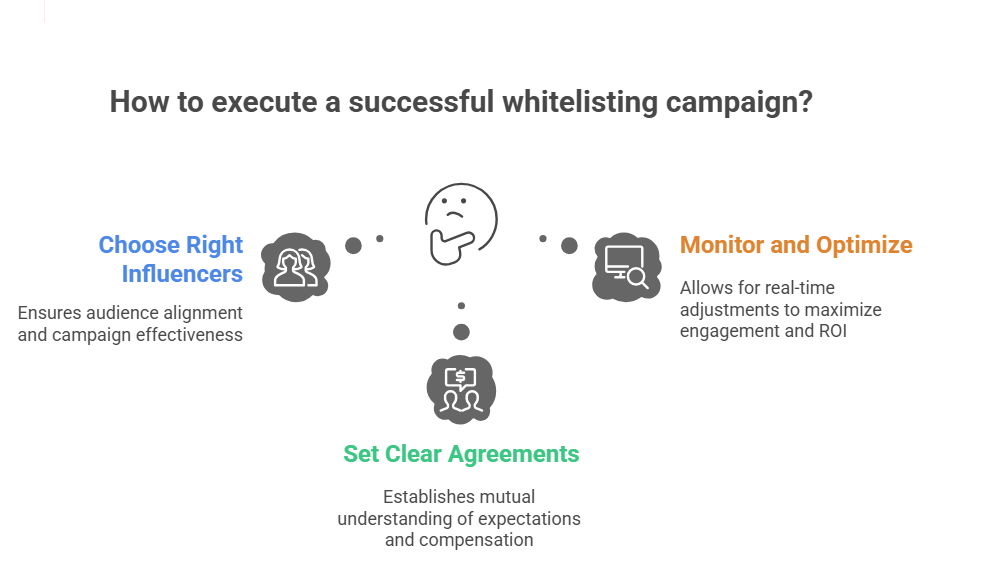
Choosing the Right Influencers
When selecting influencers for a whitelisting campaign, it’s essential to choose individuals whose content aligns with your brand values and campaign goals. Look for influencers who have an authentic connection with their audience and whose content naturally integrates with your brand. Their followers should match your target demographic, ensuring that the campaign feels organic and resonates with the right people. Don’t just focus on follower count, engagement rates and authenticity matter more. An influencer with fewer followers but higher engagement might drive better results than someone with a massive, passive audience.
Setting Clear Agreements
A well-defined contract is the foundation of any successful whitelisting campaign. It’s important to clearly outline expectations, usage rights, and compensation. Specify how long the content can be used, where it will be shared, and what permissions the brand has regarding the influencer’s content. Also, ensure that the contract includes a mutually agreed-upon payment structure, as well as any restrictions (such as exclusivity clauses). A formal agreement ensures that both parties understand their roles, reducing misunderstandings and ensuring a smoother campaign execution.
Monitoring and Optimizing Campaigns
Once your whitelisting campaign is live, it’s crucial to actively monitor its performance. Track conversions, engagement rates, and ROI regularly to assess how the content is performing across different audience segments. Use performance metrics to identify what’s working and what isn’t. This data will help you optimize the campaign in real-time, making adjustments to targeting, content, or budget allocation as needed.
Many brands now rely on experienced agencies like Effeect to manage whitelisting campaigns and optimize paid social ads. As a full-service digital marketing agency, Effeect helps businesses plan, execute, and monitor influencer and social media advertising strategies for better ROI..
Challenges in Whitelisting Social Media Content
Access Issues
One of the biggest challenges in whitelisting is ensuring smooth access between brands and influencers. On platforms like Facebook, Instagram, and TikTok, influencers need to grant brands permission to use their content for paid promotions. This can be tricky, as each platform has its own set of rules and technical requirements for setting up access. For example, Meta’s Business Manager can be difficult for both parties to navigate, especially for influencers who aren’t familiar with the platform’s settings. If permissions aren’t set up correctly, brands might struggle to get the necessary access, delaying campaigns or causing complications down the road.
Influencer Control
While whitelisting allows brands to tap into influencers’ audiences, it also presents a challenge in balancing control. Influencers often want to maintain their creative autonomy, ensuring their voice and content stay authentic to their followers. Brands, on the other hand, typically want to control the message, targeting, and performance. Striking a balance is crucial for a successful partnership. Influencers need to feel comfortable with the content being used, while brands should ensure that the ad aligns with their goals. Clear communication about expectations and creative freedom can help prevent tensions and keep both parties satisfied.
Legal and Compliance Concerns
Legal and compliance issues are also significant when setting up whitelisting campaigns. Brands need to ensure that the content complies with platform policies and advertising regulations. For example, both parties must follow rules around disclosures (e.g., using #ad or #sponsored) to avoid legal repercussions. Platforms like Instagram and TikTok have specific rules about sponsored content that must be adhered to, or the campaign could face penalties or be taken down. To avoid these risks, brands and influencers should have a formal contract in place, clearly outlining responsibilities, and make sure the agreement is compliant with all relevant advertising standards.
For more on protecting your brand and ensuring compliance across social media platforms, check out this detailed guide on creating a social media policy.
Recap of the Importance of Whitelisting
Whitelisting offers valuable benefits for both brands and influencers. Brands can enjoy more authentic engagement, better targeting, and a higher return on ad spend by amplifying influencer content. Influencers gain increased exposure, a new revenue stream, and longer-lasting content. It’s a mutually beneficial strategy that strengthens partnerships and drives results.
Encourage Brands to Adopt Whitelisting
If your brand isn’t using whitelisting yet, it’s time to start. This strategy boosts ad performance, increases engagement, and helps build trust with customers. Whitelisting offers a more authentic way to reach new audiences and create lasting relationships with influencers. Embrace it to take your campaigns to the next level.
Conclusion
In conclusion, whitelisting is a powerful tool for brands and influencers alike, offering increased reach, engagement metrics, and trust. By following the best practices outlined, both parties can build strong partnerships that drive results. Whether you’re a brand looking to amplify content or an influencer seeking additional revenue streams, adopting whitelisting can elevate your marketing strategy and create lasting impact.
FAQs
Can Whitelisting Increase My Ad Performance?
Yes, whitelisting can improve your ad performance by increasing conversions, engagement, and reach:
- Higher Conversions: Influencer content feels authentic, leading to more trust and higher conversion rates from their audience.
- Increased Engagement: Ads maintain the influencer’s voice, which resonates more with followers, resulting in more interactions.
- Expanded Reach: Whitelisting boosts content to both the influencer’s audience and lookalike groups, expanding your reach.
Overall, whitelisting blends authenticity with targeted ads, delivering better results.
How Do I Choose the Right Influencer for Whitelisting?
When selecting an influencer for whitelisting, focus on alignment with your brand values, audience engagement, and content authenticity. Look for influencers whose content resonates with your target demographic and whose followers actively engage with their posts.
Can Whitelisting Be Used for Long-Term Campaigns?
Yes, whitelisting can be a great strategy for long-term campaigns. By continuously boosting influencer content, brands can maintain engagement over time, keeping the content relevant and expanding reach beyond the influencer’s immediate audience.
What Are the Legal Considerations for Whitelisting?
Whitelisting agreements should always be formalized in a contract, outlining content usage rights, compensation, and compliance with platform guidelines. Ensure that all sponsored content is disclosed correctly, as required by social media platforms and advertising regulations.
.


