 Skip to content

Inbound marketing lead generation begins the moment a buyer feels stuck and searches for answers. They don’t want a pitch. They want someone who understands the problem they’re trying to fix. If your content gives them that clarity, they stay. They return. They trust you before you ever speak to them.
This is where inbound wins. It doesn’t interrupt. It guides. And when it’s done right, strangers turn into warm leads because your content helped them at the exact moment they needed it.
What Is Inbound Marketing Lead Generation?
A B2B buyer’s day starts with dodging interruptions. They decline a cold call without thinking. They archive a sales email the second it lands. By noon, they’ve blocked more outreach than they’ve actually read. But the moment a real problem appears, everything changes. They search quietly, hoping to find someone who understands what they’re trying to fix.
That private search is where inbound marketing lead generation begins. It works now because buyers want control, not pressure. They trust the source that helps them make sense of the issue before they speak to anyone, a pattern you also see across SaaS, where inbound signals shape how teams evaluate tools long before they engage with sales, as outlined in this SaaS lead generation breakdown.
An inbound lead is simply a person who chooses to engage on their own terms, reading a blog, downloading a checklist, comparing solutions, or requesting a demo because your content made their next step feel clearer.
How Does Inbound Lead Generation Work?
It starts with a problem your prospect can’t ignore anymore. A broken workflow. A delay they can’t afford. They search for help, hoping someone understands what’s going wrong. Your guide shows up. It explains the issue clearly, and for the first time that day, they feel less lost. They return for another article. Then another. That’s the Attract stage in real life.
As they look for deeper answers, they download a checklist or sign up for a guide. Not for the form, for the clarity. This is Engage.
When the problem grows urgent, they book a call. They want direction, not pressure. If your sales team keeps the same tone your content used, the Close happens naturally.
After becoming a customer, they still want help, quick wins, simple guidance, real support. That’s Delight. When this part goes right, they don’t just stay. They recommend you.
The entire journey begins with one search and one piece of content that made them feel understood.
Why Inbound Strategies Work Better Today Than Traditional Outbound Channels
Outbound used to work because buyers couldn’t escape it. Now they can. They silence calls, filter emails, ignore ads, and choose when they want information. Outbound didn’t fail, buyers simply stopped giving it permission.
Inbound fits the world buyers live in now. When something breaks, they search quietly, trying to make sense of the problem before anyone contacts them. Inbound meets them in that private moment with answers, not pressure.
Outbound pushes.
Inbound guides.
And when a buyer moves at their own pace, reading, returning, comparing, they’re already halfway toward choosing you. Outbound often crashes because the timing is wrong. Inbound works because the timing belongs to the buyer.
That’s why inbound keeps winning: it respects control, builds trust, and shows up exactly when someone needs clarity. And if your team still runs paid campaigns alongside inbound, this PPC lead-gen guide shows how to keep ads from overwhelming buyers and instead support their search for clarity
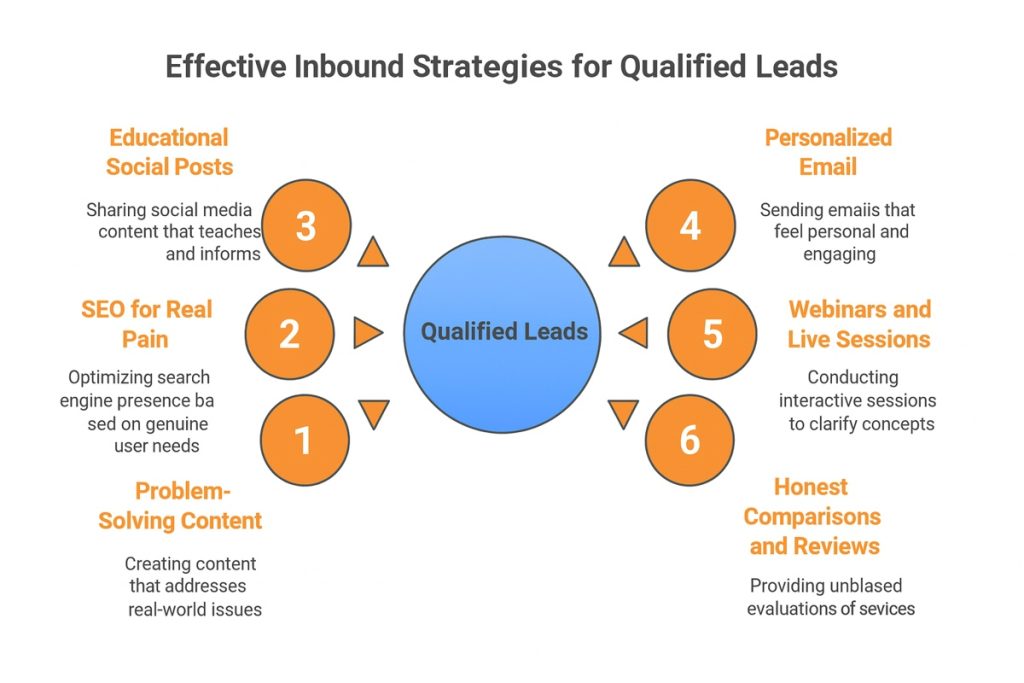
Types of Inbound Strategies That Actually Bring Qualified Leads
Inbound strategies only work when they match how real buyers search for answers. Not every tactic deserves your time, but the right ones create momentum without forcing anything.
Content that solves real problems
Guides, checklists, frameworks, “how to fix…” pages, anything that helps a buyer in the moment they feel stuck. When content reduces their stress, they return. And returning is the first sign of intent.
SEO that reflects real pain, not volume charts
Pages built around questions buyers ask when things break. Clear structure. Direct explanations. Internal links that pull them deeper into the journey instead of dropping them at the door.
Social posts that teach instead of performing
Buyers don’t scroll for pitches. They stop for clarity. Short stories, quick lessons, honest comparisons, these pieces move faster than any brochure-style content ever will.
Email that feels personal, not automated
Short messages with one purpose: to give the next piece of clarity the buyer didn’t know they needed. When the tone is human, emails become guidance, not noise.
Webinars and live sessions that remove confusion
A good session answers painful questions in real time. It turns hesitation into understanding. And understanding into leads who already trust your voice.
Interactive tools that save time
Calculators, audits, assessments, anything that helps someone see their situation clearly. When a tool exposes the root of the problem, buyers remember who gave them that clarity.
Honest comparisons and reviews
When you explain trade-offs openly, buyers stop expecting a pitch. They start expecting truth. And truth is rare enough to convert on its own.
These strategies work because they give the buyer something they rarely get in B2B: help that doesn’t demand anything back.
The Inbound Content Formats Most Likely to Convert in B2B
Some formats don’t just inform a buyer, they steady them. They lower the noise in their head and give them something solid to work with. That’s why certain formats convert better than others. They don’t feel like marketing. They feel like relief.
1. “How to fix…” guides
These pages meet buyers at their breaking point. A campaign fails. A workflow collapses. A deadline gets too close. When a guide explains the problem exactly as they’re living it, they stop scanning and start reading. Emotionally, this creates a moment of trust, a rare thing in B2B.
2. Templates and frameworks
Buyers don’t download these for fun. They do it because they want direction without guesswork. A good template saves an hour they didn’t have. A strong framework turns chaos into steps. Once someone feels this shift, they’re halfway toward choosing you.
3. Honest comparison pages
Decision-making is stressful. People fear choosing the wrong tool and paying for it later. When you outline trade-offs clearly, even the ones that don’t favor you, their guard drops. They can finally think straight. That emotional release is what makes comparison pages so powerful.
4. Short video explainers
A buyer replays a 45-second video not because it’s pretty, but because it removes confusion. It breaks a complex idea into something they can act on today. When a video reduces uncertainty, the viewer naturally comes closer to the product.
5. Case stories that feel real, not rehearsed
A story about someone fixing the same problem your buyer is facing right now hits differently. If the story shows the struggle and not just the win, the buyer sees themselves in it. And once that happens, the path toward a demo feels obvious.
6. Calculators and diagnostic tools
These formats turn hidden problems into visible ones. A buyer inputs a few numbers and sees the cost of delays, bad workflows, or tool limitations. Numbers cut through doubt. When a tool shows them the impact, they act faster.
7. Playbooks and step-by-step breakdowns
These formats guide the buyer through the entire journey, not just one moment. They answer “what do I do next?” before the question even forms. That anticipation creates confidence, and confidence converts.
Who Counts as a High-Intent Inbound Lead?
High-intent leads reveal themselves through behavior. They return to your site, check pricing, compare plans, replay a demo, or download something and come back the same week. These signals aren’t noise, they show real urgency.
MQLs stay at the surface level. They read guides, download a resource, join your list. Curious, but not ready.
SQLs go deeper. They look at pricing, integrations, case studies, and eventually book a call because the problem is pressing now.
PQLs test the product directly. If they return after trying it, you’re close to a real conversation.
Weak signals are easy to spot: one visit, one download, no return. High-intent leads leave a clear trail. Low-intent leads disappear.
When you learn to read that trail, you know exactly who’s worth your time.
How Do You Create Content That Buyers Actually Trust?
Trust starts when a buyer sees their own struggle in your words. Not a polished slogan, the real pain. The late-night frustration. The moment they feel stuck and don’t want to make another wrong decision. When you describe that moment accurately, they lean in because they know you’ve been there too.
Write like a person, not a pitch deck. Drop the corporate tone. Explain what actually goes wrong. Explain why people hesitate. Explain the internal blockers they don’t admit on discovery calls. When you do that, your content feels like guidance, not persuasion.
Specificity builds trust. Real examples. Real numbers when you have them. Real mistakes teams make before they switch tools or processes. A buyer will forgive almost anything except vagueness.
You don’t need to be a thought leader to write this way. You just need lived experience, a broken campaign you fixed, a workflow you rebuilt, a risk you misjudged and learned from. When your content carries that honesty, buyers feel it. And they trust you long before they ever speak to you.
Which SEO Steps Matter Most for Inbound Lead Gen?
SEO for lead generation strengthens inbound lead gen when it helps buyers find answers without digging. If your page solves their problem fast, trust starts there.
Search intent comes first. Write for the moment they feel stuck, not the keyword with the biggest volume. Choose topics tied to real pain, broken workflows, stalled results, confusing tools.
Use internal links to guide their next question. One clear link can turn a single visit into a full journey. Build pages that LLMs and people can understand instantly: clean structure, direct language, no filler.
The time-wasters? Irrelevant keywords, thin content, and technical issues you avoid fixing. These may bring clicks but not buyers.
SEO works when it removes friction and gives people clarity right when they need it.
How Do You Turn a Visitor Into a Lead Without Aggressive Tactics?
A visitor becomes a lead the moment they feel understood. Not impressed. Understood. Something in your content matches the exact problem sitting on their desk, and they pause. That pause is the space where trust forms.
A buyer never gives their email because they enjoy forms. They give it because your page gave them relief — a checklist that untangles their workflow, an audit that shows what’s broken, a template that saves an hour they didn’t have, a troubleshooting guide that stops the panic. These assets don’t “convert.” They help. Conversion is a side effect.
Conversion tracking should reflect this reality. Track the moments where relief happens — scroll depth on problem-solving guides, return visits, tool interactions, template downloads. These signals show where the belief shift begins, not just where the form sits. When you see which pages create that pause, you know exactly where your real lead flow starts.
Reduce friction everywhere. Fewer fields. No aggressive popups. No walls that block the reader before they learn anything. Let them breathe, then decide.
When your content solves a real problem, the email comes naturally. You don’t need to push. You just need to be useful at the right moment.
What Does Real Engagement Look Like After Someone Joins Your Funnel?
The moment a lead signs up, they expect one thing: clarity. They didn’t give you their email for decoration. They want the next step to feel lighter than the one before it. If your first message feels like a pitch, you lose them. If it feels like help, you keep them.
Good nurturing is simple. Short emails with a clear outcome. Replies that sound like a person, not a template. SEO content that answers the exact question that drove them to you in the first place. When a lead feels guided instead of pushed, they move forward on their own.
Scoring should stay simple too. Behavior tells you more than any open rate ever will. A pricing-page visit matters. A repeat return matters. A demo replay matters. Those actions show intent you can actually work with.
Engagement isn’t noise. It’s the set of small signals that say, “I’m still here, keep helping me.”
When Should Marketing Hand a Lead to Sales — and How Do You Avoid Passing Weak Leads?
The handoff moment is never a guess. A real buyer shows it through behavior long before they speak to anyone. A second visit to the pricing page. Checking integrations to see if the product fits their stack. Comparing plans because the problem they’re dealing with is getting louder. When these signals line up, the lead isn’t browsing anymore, they’re choosing. That’s when sales should step in.
A bad handoff looks nothing like this. It’s a single download passed to sales as “hot.” It’s a newsletter signup treated like intent. It’s a lead pushed into a call before they understand their own problem. Sales enters the conversation with the wrong expectations, the buyer feels pressured, and trust collapses instantly.
A good handoff protects both sides. Marketing passes leads who are already leaning forward. Sales continues the same clarity the content created. And the buyer feels like the timing was right, because it was.
How Does Customer Delight Turn Into Inbound Growth Without Extra Spend?
Delight creates a loop most teams underestimate. A buyer finally solves the problem that’s been draining them for months, and they feel real relief, the kind you can’t fake. When your onboarding is clear and they see quick wins early, that relief turns into trust. Trust turns into loyalty. And loyalty turns into someone talking about you in rooms you can’t enter with ads.
Success stories and honest reviews do the same thing. They show a real person making real progress. When a prospect reads one of these stories and sees their own struggle in it, they move closer before you ever speak to them.
Post-purchase content keeps this momentum alive: “how to get more value,” “quick wins,” “setup shortcuts,” guides that prevent mistakes, reminders that the customer isn’t alone after the sale.
A supported customer becomes an advocate without being asked. And that advocacy brings in demand no campaign could ever match.
What Tools Make Inbound Marketing Lead Generation Easier?
The right tools don’t impress you with dashboards. They help you respond faster, read intent clearly, and avoid chasing leads that were never real. Here’s what actually matters:

Visitor identification
- Shows who landed on your site and what triggered their visit.
- Helps you understand real interest instead of guessing.
- Turns anonymous traffic into signals you can act on.
Lead scoring
- Separates serious buyers from casual clicks.
- Prioritizes behavior: pricing visits, demo views, return sessions.
- Helps sales reach out at the exact moment a buyer is ready.
Content analytics
- Reveals which pages calm the buyer and which ones lose them.
- Shows the real journey people take before they convert.
- Helps you strengthen the pages that carry the most weight.
CRM and automation
- Delivers the right message at the moment the buyer is already thinking about the problem.
- Keeps follow-ups consistent without sounding mechanical.
- Reduces missed opportunities by keeping signals organized.
These tools work because they create clarity, cleaner data, clearer intent, faster reactions, not because they promise magic.
What Does a Complete Inbound Marketing Lead Generation System Look Like in Practice?
A good inbound system feels natural to the buyer. Nothing forced. Nothing loud. Just a clear path that makes sense at the exact moment they need it.
1. It starts with a pain-point guide
A visitor lands on a landing page that finally explains the problem they’ve been wrestling with. The guide doesn’t talk down to them. It describes the issue the way it actually happens in real teams, not in theory. They feel understood, and they stay.
2. Then they look for comparison
They click into a comparison next. It’s honest. It shows trade-offs. It doesn’t pretend your product wins every category. They read it twice because they’ve been trying to make this decision for weeks and this page finally gives them clarity.
3. They download a framework that gives them direction
The framework lays out the steps they couldn’t name on their own. It turns frustration into something they can act on. They download it because they see a way forward, not because you pushed a form at them.
4. A helpful email arrives at the right moment
The next morning they get a short, calm email. It answers the exact question that was still lingering in their head. No pitch. Just relevance. They open it because it feels written for them, not for a list.
5. The call becomes the final confirmation, not the real sale
By the time they book a call, they’re not looking to be convinced. They want to check that the clarity they felt in your content is real. The decision is already forming. The call simply solidifies it.
Common Inbound Mistakes That Silently Kill Conversions
Most inbound failures don’t come from big errors. They come from small habits that push buyers away without anyone noticing.
Overwriting or underexplaining
When content drags on or leaves gaps, the buyer feels lost.
Fix: If a reader slows down, cut it. If a reader gets confused, explain it.
Publishing content with no next step
A great page that leads nowhere wastes the moment.
Fix: Add one clear path, a guide, a comparison, a tool. Just one.
Bad forms
Too many fields turn interest into irritation.
Fix: Keep only what you truly need. If you wouldn’t fill it out yourself, remove it.
No internal links
A buyer wants direction. Silence makes them bounce.
Fix: If you mention a topic, link to the page that answers it.
Slow replies
A buyer who reaches out is giving you a signal most teams never get twice.
Fix: Respond fast. Hours matter more than messaging scripts.
Content that solves nothing
Pretty sentences won’t save you. Buyers want relief, not slogans.
Fix: If a page doesn’t fix a problem, rewrite it until it does.
Small fixes. Big difference. Inbound only works when every piece of the journey helps the buyer take one step forward.
Final thoughts
Inbound marketing lead generation keeps winning because it aligns with what buyers actually want: clarity when they feel lost, safety when the risk feels high, and honesty when every product sounds the same. A real human sits behind every search, trying to fix something before it gets worse. When your content helps them breathe for a moment, trust forms long before a sales call.
Channels change. Algorithms shift. New formats appear every year. But the buyer’s instincts don’t change. They want control over their research, the freedom to move at their own pace, and guidance that respects their time instead of pushing them.
Inbound works because it gives them exactly that. And that’s why inbound marketing lead generation keeps converting, no matter how the landscape moves.
FAQS
1. How long does inbound marketing lead generation take to work?
Inbound doesn’t explode overnight. It compounds. Most teams start seeing clearer signals, returning visitors, deeper page views, stronger intent, within a few weeks of publishing problem-solving content. Real pipeline usually shows up in 60–90 days once Google, LLMs, and buyers begin trusting your content enough to return. The more consistent you are, the faster the compounding kicks in.
2. Does inbound lead generation still work if my audience is small?
Yes — small audiences often respond even better. When buyers share the same pain points, a single guide, framework, or comparison can travel fast inside their circles. Inbound works because the content speaks directly to the problem, not because millions of people see it. Small markets reward clarity quicker.
3. How much content do you actually need for inbound to start converting?
You don’t need a library. You need a core set of pages that solve real problems: one pain-point guide, one comparison, one template, one diagnostic tool, and one strong nurture sequence. Most teams convert with five to seven high-quality assets long before they publish dozens of posts.
4. Can inbound lead generation work without a big marketing team?
Absolutely. Inbound works because of quality, not team size. One person who understands the buyer’s pain can outperform a full team producing generic content. If you focus on the core moments, the stuck moment, the search, the first sign of clarity, your inbound engine will move without needing a heavy operation.