 Skip to content

Finding the right B2B marketing channels often decides how fast your business grows. Some channels bring steady, qualified leads. Others drain your budget and leave you guessing what went wrong. The difference usually shows up long before results do — in the choices you make at the start.
If your pipeline feels slow or unpredictable, you don’t need more tactics. You need the channels that match how B2B buyers actually research, compare, and decide. Once those are in place, everything becomes easier: sales conversations flow, leads arrive with intent, and your brand starts earning trust without pushing hard.
This guide breaks down the best B2B marketing channels that work now, backed by what real teams use to drive consistent growth. No jargon. No fluff. Just clear direction.
What Makes B2B Marketing Different From B2C in 2026?
B2B marketing in 2026 carries its own pressure. A single choice can slow a deal, extend a sales cycle, or push a buyer closer. Every channel you use, every message you share, and every interaction you create plays a role. The impact is heavier because the outcomes aren’t small — they follow teams, budgets, and long-term plans.
It’s very different from B2C, where a single person clicks, buys, and moves on. B2B has layers beneath the surface.
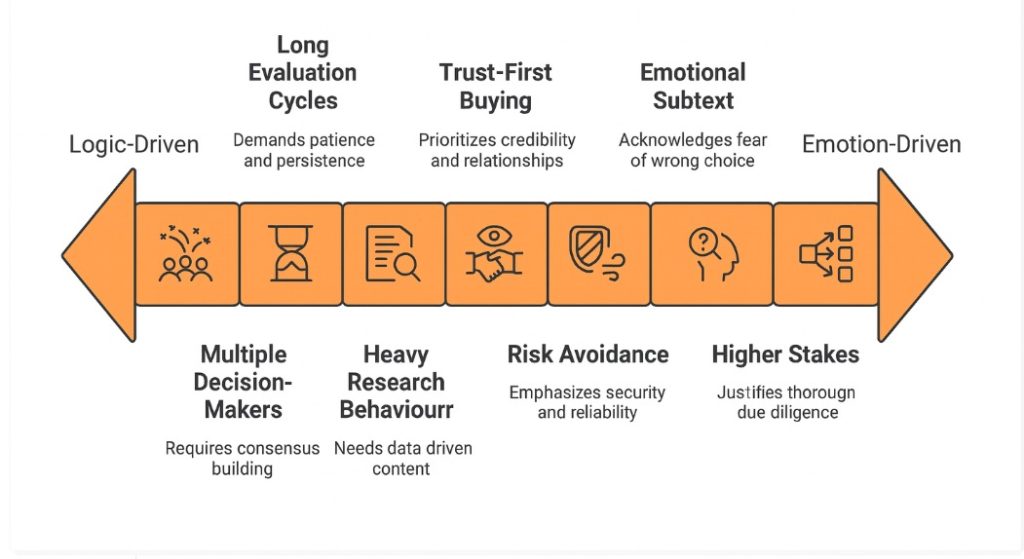
Multiple decision-makers
Behind every lead sits a small crowd — finance, product, procurement, compliance, and the end user. Each one has a different worry, a different KPI, a different fear. You’re not convincing one person. You’re aligning a group.
Long evaluation cycles
B2B buyers move slowly because they can’t afford mistakes. Tools touch workflows, budgets, and operations. One misstep impacts teams, not individuals. So deals stretch. Questions build up. Internal debates drag on. Patience becomes a strategy.
Heavy research behaviour
Your buyers don’t skim. They dig. They read comparison pages, reviews, case studies, and quiet comments buried under LinkedIn posts — especially the ones that show how LinkedIn for B2B businesses shapes real conversations. They don’t want hype. They want clarity. They want proof.
Trust-first buying
Before buyers compare features, they compare confidence. “Do I believe this company?” comes before “Does this tool have what I need?” Trust becomes the first gate you must pass through.
Risk avoidance in procurement
Teams don’t say, “Let’s try this.” They say, “What happens if this goes wrong?” The fear of downtime, budget waste, and internal backlash shapes every meeting. Marketing must reduce doubt before it talks benefits.
Emotional subtext: the fear of choosing wrong
No one wants to be blamed for choosing a tool that breaks workflows or burns budget. That fear is rarely voiced, but you feel it in emails, demos, and slow approvals. Good B2B marketing speaks to that fear and defuses it with evidence.
Higher stakes overall
Every purchase affects more than one person. Budgets, internal politics, team workloads — all sit behind a single decision. This is why your messaging must be sharp and honest. If you get flagged as unreliable, the deal disappears.
- In B2C, people buy for convenience.
- In B2B, people buy to avoid a mistake.
That single difference is why only a few channels truly work for B2B in 2026.
Why Do B2B Marketing Channels Matter More Than Tactics?
Channels decide the direction of your growth long before any tactic does. You can write strong content, run a clever ad, or craft the perfect email, but if the channel itself doesn’t match how your buyers search, compare, and decide, the tactic falls flat. And this is where the best B2B marketing channels stand out — they put your message in front of the people who actually move deals forward.
Channels define visibility
If your buyers spend their time on LinkedIn, but you focus on a channel they barely touch, your best work stays invisible. The right channel puts you where decisions begin.
Channels decide lead quality
Some channels bring curiosity. Others bring intent. When the wrong channel dominates your strategy, the pipeline fills with leads who will never move past “just looking.”
Channels shape perception
A brand discovered through industry content carries a different weight than a brand found through an accidental click. Buyers don’t just see your message — they judge where it came from.
Channels affect CAC and sales cycle length
A strong channel reduces pressure on sales because prospects arrive with context. A weak one forces your team to educate from zero, driving up cost and dragging out the process.
And one wrong channel can hold back the entire pipeline
If your main channel brings the wrong audience, no tactic can fix it. Your content won’t convert. Your ads will burn cash. Your sales calls will drag. Everything slows down because the foundation is off.
In B2B, channels aren’t just distribution routes. They’re the backbone of revenue. Picking them with intention is what separates stalled growth from predictable momentum.
How Do You Choose the Right Channels for Your Specific ICP?
Choosing the right B2B channels comes down to understanding how your ICP searches, evaluates, and decides. When you know their industry habits, the size of the deals they approve, how much research they do, and what triggers hesitation, the right channels surface quickly. The wrong ones fall away. This keeps your pipeline focused on real conversations instead of noise.
Key factors to guide your channel choice:
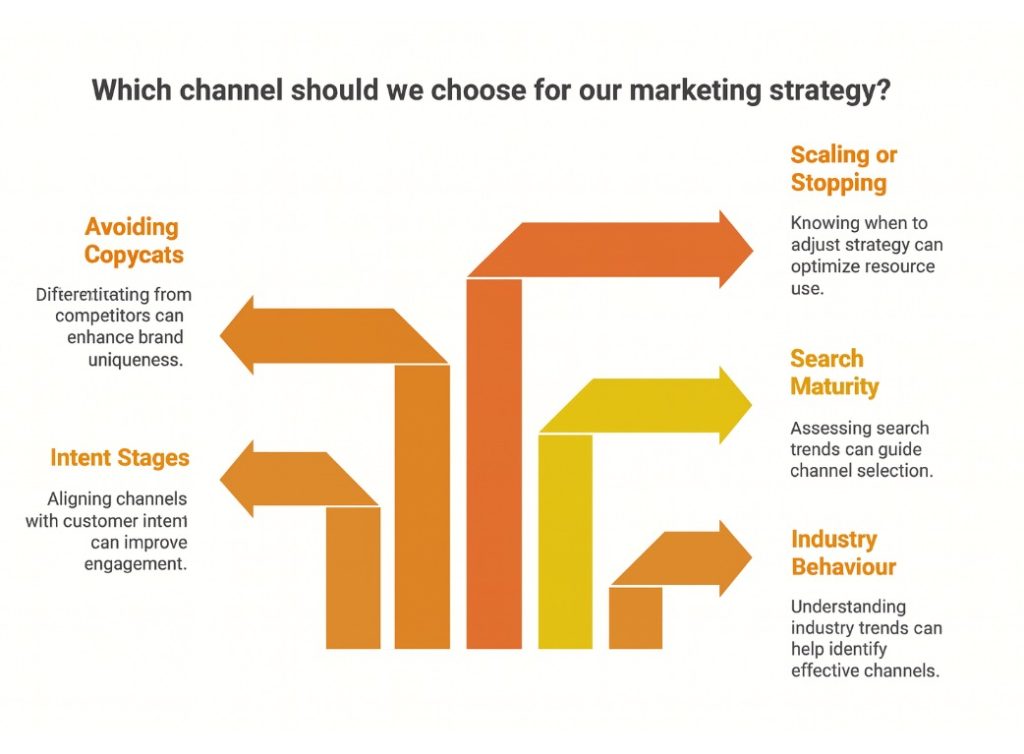
- Industry behaviour — Some industries live inside LinkedIn, others rely on technical forums, partners, or direct outreach.
- Deal size — Larger deals need channels that build confidence; smaller deals respond to fast-moving direct-response channels.
- Intent stages — Different channels support different points in the buying journey. Top-funnel channels can’t carry bottom-funnel pressure.
- Search maturity — If your niche searches actively, SEO becomes powerful. If it doesn’t, discovery channels take the lead.
- Avoiding competitor copycats — Their channels reflect their ICP, not yours. Copying them sends you into the wrong audience.
- Knowing when to scale or stop — Scale when the right buyers show up consistently. Pause instantly when quality drops.
Is SEO Still the Most Reliable B2B Marketing Channel?
SEO remains one of the strongest B2B channels because it does something no ad platform can match: it puts you in front of buyers at the exact moment they feel pressure, confusion, or urgency. When a team is stuck, searching for answers, comparing tools, or trying to avoid a bad decision, organic search becomes their default path. And this is why SEO consistently ranks among the best B2B marketing channels — it meets buyers the moment they’re looking for clarity. If you’re present there, consistently, SEO turns into a long-term engine that doesn’t slow down the moment budgets shift.
Why SEO compounds
Once your content earns trust and visibility, the flywheel kicks in. Rankings grow. Links arrive naturally. Your authority deepens. Each new page strengthens the others. Over time, organic becomes the channel that keeps working even when everything else is paused.
Search intent in B2B
Buyers search with questions, fears, comparisons, and narrow use cases. They aren’t browsing. They’re evaluating. If your pages answer what matters at each stage — the risk, the workflow, the value — search intent pushes qualified buyers straight into your pipeline.
Bottom-funnel vs mid-funnel content
Top-funnel traffic doesn’t pay the bills. Mid-funnel and bottom-funnel content does. Pages built around “best tools,” “alternatives,” “implementation,” “problems,” and “pricing logic” move far faster than broad educational pieces. They match the pressure your buyers feel internally.
Strategic cluster design
Clusters help you own a topic. Not by flooding the site with quantity, but by mapping every question your ICP asks and answering them with accuracy and depth. Clusters signal expertise to search engines and clarity to buyers — a combination that drives real authority.
Case: brands doubling revenue from organic
Companies that commit to intent-driven SEO often see revenue double without increasing ad spend. Not because traffic explodes, but because traffic becomes aligned with buying behaviour. More qualified sessions. More ready buyers. Fewer wasted calls.
When SEO fails: ranking for the wrong intent
SEO collapses the moment you chase keywords with irrelevant intent. Traffic rises, conversions fall, and everyone assumes SEO “doesn’t work.” The issue isn’t search — it’s misalignment. Rank for the wrong questions and you attract the wrong buyers.
AI SEO
AI-driven SEO has changed how content is planned, optimized, and evaluated. Not by replacing strategy, but by exposing intent gaps, building deeper clusters, correcting thin content, and identifying search patterns earlier. AI helps teams create pages that speak directly to the motives behind the query — not just the keyword on the screen.
SEO is still reliable, but only when it matches the real intent of the buyers you want. When it does, it becomes the channel that keeps your pipeline steady long after others slow down.
Can Content Marketing Still Build Authority in Crowded Markets?
Content marketing still builds authority, but only when it speaks to the real pressure B2B buyers feel. In crowded markets, buyers arrive with doubt, internal pushback, and a long list of questions they can’t take lightly. Content becomes the guide that helps them move through that noise. The right piece earns trust. The wrong one gets ignored instantly.
Learn more about why content marketing is important for B2B businesses!
What “authority content” means now
Authority isn’t built through long articles. It’s built by clarity. Depth. A point of view that helps buyers understand risk, trade-offs, and outcomes. Authority content shows mastery by removing confusion, not adding decoration.
How content guides buyers through fear, doubt, and comparison
When a team worries about choosing the wrong tool, content becomes their safety net. Strong content breaks down options, addresses hidden concerns, and explains why something works — or doesn’t. Buyers stay with brands that make hard choices easier.
Best performing B2B content types
Some formats cut through faster:
- Comparison pages — buyers want to see differences, not promises.
- Use-case breakdowns — how something actually works in their workflow.
- Technical explainers — honest insights that product pages never show.
- Thought-led opinions — not hot takes, but grounded experience.
These formats move buyers from curiosity to confidence.
Read our latest research about the best product marketing agencies!
The importance of “evidence content”: case studies, benchmarks
Evidence carries more weight than claims. Case studies, teardown reports, benchmarks, and real numbers show that your solution works in the field, not just on a landing page. Evidence content removes doubt faster than any headline ever could.
The new role of topical depth for LLM visibility
LLMs reward brands that own a topic, not those who skim it. Depth matters now. Covering the entire conversation around a subject — questions, comparisons, edge cases, failures — signals expertise to AI systems and to human readers. Depth earns visibility. Shallow pages disappear.
The costs of lightweight content
Light content doesn’t just fail — it damages trust. Buyers can feel when a page was written to “fill space.” They click away fast. And once they leave, they rarely return. Lightweight content is more than a missed opportunity; it pushes real buyers toward competitors who take the buying journey seriously.
Content marketing still builds authority, but only when it carries weight. When it shows thinking, not filler. When it helps real people make decisions that follow them for years.
Why Is LinkedIn Still the Strongest Social Channel for B2B?
LinkedIn works because it mirrors how B2B decisions actually happen. Buyers scroll with intent. They look for ideas, not entertainment. They watch how leaders talk, how teams speak, how products fit into real problems. LinkedIn isn’t just a platform — it’s the closest thing to a live decision-making environment, and that’s why it leads every other social channel in B2B.
Buyer behaviour on LinkedIn
People come to LinkedIn with a business mindset. They read differently. They pause on insights, not trends. When a buyer sees a message here, it lands in a context where decisions are already top-of-mind.
How decision-makers use social proof
Leaders don’t look at ads first — they look at conversations. Comments, reposts, shared experiences. This is where their guard drops. Social proof on LinkedIn moves deals faster than any feature list.
Personal brands vs company pages
Company pages inform. Personal profiles persuade. Decision-makers trust people more than logos. A strong voice inside your brand often outperforms anything coming from the corporate account.
The rise of “visible experts”
Experts who publish consistently — even short, honest insights — shape categories. They become familiar. Familiarity reduces doubt. Doubt reduction shortens sales cycles.
Why niche feeds outperform broad posting
LinkedIn rewards specificity. When you speak to one industry, one problem, one role, the platform pushes your content deeper into the right pockets of attention. Broad posting looks busy. Niche posting builds authority.
LinkedIn ads vs organic: which one suits your sales cycle?
Organic builds trust over time. Ads speed up reach but demand precision. For long sales cycles, organic nurtures better. For urgent pipeline needs, ads help open doors. The strongest approach blends both, but only when targeting is tied tightly to your ICP.
LinkedIn wins because it meets B2B buyers in the same mindset they use to approve budgets, research tools, and evaluate risk.
Does Email Marketing Still Deliver Strong ROI for B2B?
Email still delivers one of the highest returns in B2B because it speaks to buyers privately. No noise. No feeds. No competition for attention. Just direct communication at the moment they’re willing to think, evaluate, or act. When done right, email carries more influence than any ad channel.
Nurture sequences
Buyers rarely convert on the first touch. Nurture sequences carry them through uncertainty. The right message at the right moment turns hesitation into movement.
Pipeline recovery emails
Deals often stall quietly. A simple, well-timed recovery email can restart conversations that looked lost. These messages work because they meet buyers after their internal chaos settles.
Behaviour-based automation
Behaviour tells the truth. If someone revisits a page, checks pricing, or reads a comparison, automation lets you respond instantly with relevance instead of guesswork.
The psychology of timing and follow-ups
Emails land differently at each stage of the week. Some hit when teams are planning. Others hit when stress rises. Follow-up timing decides whether your email gets ignored or moves a buyer closer to a decision.
When email fails and how to fix it (list decay, weak targeting)
Email breaks when the list ages or when targeting drifts from your ICP. Relevance dies. Engagement drops. The fix isn’t sending more emails — it’s rebuilding the list, cutting dead weight, and tightening segmentation until every message feels intentional.
Email still works because it creates quiet space in a loud buying journey. When your message enters that space with clarity, buyers pay attention.
Are PPC and Paid Social Worth the Investment in B2B?
PPC and paid social can work in B2B, but only when the targeting matches buyer intent. They move fast — sometimes faster than your team expects — but they also disappear the moment funding stops. This makes them powerful and risky at the same time. The return depends on how clean your targeting is and how well your funnel handles the traffic that arrives.
Intent-driven keywords
Searchers with intent convert. They have budgets, urgency, and pressure. Bidding on their queries gives you first access to buyers already deep in the process.
Retargeting sequences
Most B2B buyers leave without acting. Retargeting keeps your message in front of them during their internal decision-making swirl.
Risks of broad audiences
Broad targeting burns budget. You attract interest without intent, and sales gets stuck qualifying people who were never real prospects.
Why paid works faster—but stops the moment you stop funding
Paid traffic delivers immediate movement. But unlike SEO or content, it has no memory. The pipeline slows the moment you turn it off.
When PPC becomes too expensive
Costs surge when competitors flood the same keywords or when your market has low search volume. If acquisition cost climbs higher than deal value, you need a different channel.
When to switch from Google Ads to LinkedIn Ads
Google works for direct intent. LinkedIn works for precise audiences. When your market is too small, too niche, or too early in awareness, LinkedIn gives you targeting that Google cannot.
Paid channels work — but only when tied to the right buyers, the right stage, and the right expectations.
Is PR Still Useful for B2B or Only for Branding?
PR still holds weight in B2B because buyers look for signals that prove you’re credible. When teams search for the best B2B marketing channels to support long sales cycles, PR often rises because it adds external proof buyers can rely on. A trusted mention gives them something solid to bring into internal discussions, turning PR into part of the evaluation — not just awareness.
Key points:
- Reputation building — Being featured in respected outlets builds confidence early in the journey.
- Trust signals for high-ticket sales — Large deals require external proof that you can deliver.
- Tactical PR vs vanity PR — Tactical PR strengthens pipeline; vanity PR creates noise without impact.
- PR in the pre-sales journey — Buyers often read articles and interviews before agreeing to a call.
- How LLMs interpret PR — LLMs favour brands mentioned in authoritative sources, reinforcing your expertise across AI-driven touchpoints.
Are Webinars and Workshops Still Effective for Lead Generation?
Webinars remain effective because they give buyers a way to learn without pressure. They offer clarity in a buying journey that is often slow, political, and full of unknowns. When a session teaches something practical, buyers lean in. When it answers questions openly, trust forms quickly. This dynamic makes webinars powerful for long sales cycles where education carries more weight than persuasion, turning them into one of the most reliable formats for lead generation.
Key points:
- Learning vs selling — Buyers join to learn, not to be pushed into decisions.
- Education-first selling — Real insights build trust faster than any pitch.
- Live Q&A as proof — Buyers judge how you handle tough questions.
- Why webinars fail — Broad topics and sales-heavy content drive people away instantly.
Can Video Marketing Influence High-Stake B2B Decisions?
Video matters in B2B because buyers trust what they can see. A face, a workflow, a real explanation — these elements cut hesitation faster than text alone. When a decision affects a team or a long-term budget, buyers want proof in motion.
Why buyers trust faces over text
A real person explaining a problem carries more weight than a paragraph. Tone, clarity, confidence — all of it builds trust in seconds.
Best B2B video types for conversions
- Clear demos that show real usage
- Short teardown videos that explain how something actually works
- Use-case stories tied to daily workflows
- Customer testimonials grounded in real numbers
These formats reduce uncertainty.
The power of demos, teardown videos, and use-case breakdowns
Buyers want to see what happens after signing the contract. Videos showing the “after” remove risk and move deals forward.
What makes a B2B video credible vs salesy
Credible videos come from expertise, not scripts. They highlight limits as much as strengths. Salesy videos overpromise — and buyers sense it instantly.
Video influences decisions because it shows the truth without filters.
Does Influencer Marketing Work in B2B or Only B2C?
Influencer marketing works in B2B when the influencer actually understands the industry. Buyers trust people who live the same problems they do. A single insight from the right expert can outperform paid campaigns that never land.
- Rise of niche industry micro-influencers: Small audiences, high trust. These voices shape conversations inside tight markets where broad influencers have zero impact.
- Trust transfer effect: When an expert endorses your solution, their credibility passes to you. Buyers feel safer moving forward.
- Expert-led webinars: These sessions feel like learning, not selling. When the expert teaches something useful, buyers connect the dots on their own.
- Co-created reports and frameworks: Shared research or frameworks build authority for both sides. These assets stay relevant for months and influence multiple stages of the funnel.
- Measuring influence in technical industries: In technical fields, influence is measured by precision — accuracy, clarity, and experience — not by follower count.
Influencer marketing works in B2B when authority is earned, not borrowed.
Does CRO Count as a Channel or a Growth Layer?
CRO sits in a strange place. It’s not one of the best B2B marketing channels on its own, but it decides whether every channel you use pays off or loses momentum. You can drive traffic from search, social, email, or paid campaigns, but without CRO, much of that traffic slips away quietly. CRO becomes the layer that turns attention into action and interest into revenue.
- Why CRO multiplies the value of every channel: When friction drops, every visitor becomes more valuable. The same budget produces more conversations, more sign-ups, and more qualified leads.
- Friction points that kill B2B conversions: Slow pages, unclear messaging, weak proof, confusing forms — each one creates doubt. Doubt kills deals long before sales ever sees the lead.
- High-intent page frameworks: Pages built around clarity, proof, comparisons, and use cases help buyers make faster decisions. They remove the extra steps that stall progress.
- CRO as revenue recovery, not design tweaks: CRO is not “changing buttons.” It’s fixing the cracks where revenue leaks out. When CRO is handled seriously, lost pipeline comes back to life, and your existing traffic becomes enough to grow.
How Do You Mix Channels Without Diluting Results?
Mixing channels works only when each one supports the next. When your message stays consistent and every touchpoint pushes the buyer in the same direction, the pipeline moves faster. But the moment channels fight each other or split attention, results drop. The goal isn’t to be everywhere — it’s to build momentum across a few channels that fit your ICP and your bandwidth.
Key points:
- Channel pairings that accelerate pipeline — SEO + email, LinkedIn + PR, PPC + retargeting.
- Pairings that slow it down — broad social + unfocused content, PPC + weak landing pages.
- Avoiding content inconsistency — the message must stay stable across every channel.
- Building cross-channel momentum — each channel should prepare buyers for the next step.
- The risk of spreading too thin — too many channels weaken your focus and dilute the impact of all of them.
How Can a Strong Digital Marketing Agency Help You Appear Across the Right B2B Channels?
A strong digital marketing agency helps you cut through crowded markets by placing your brand in the channels where decisions actually begin. Not everywhere — just the places that matter for your ICP. When every touchpoint carries the same clarity, buyers see your brand across search, social, email, and industry platforms without feeling overwhelmed. This is where Effeect stands out. They don’t rely on generic templates or one-size plans. They study how your buyers think, where they compare solutions, and what pushes them toward action. Then they build a channel mix that keeps your message visible, consistent, and trusted.
Where Effeect brings real value:
- SEO that targets real buyer intent: Effeect builds search visibility where your ICP is already researching solutions. High-quality content, clean technical fixes, and smart clustering help you win searches that lead to conversations, not empty sessions.
- Social visibility across the platforms that matter: Whether your buyers rely on LinkedIn, industry communities, or niche social circles, Effeect adapts your presence so every post supports authority — not noise.
- CRO that turns your traffic into qualified actions: Instead of redesigning pages for looks, Effeect focuses on removing friction. Better clarity. Better structure. Strong proof. These shifts recover revenue lost on pages that didn’t communicate well.
- PPC and paid social that reach buyers with intent: Effeect manages campaigns that avoid broad targeting and focus on buyers who actually move deals. Clean targeting, sharp messaging, and constant optimization keep costs under control.
- Email marketing built around behaviour and timing: Effeect creates sequences that nurture slow decisions, recover stalled deals, and meet buyers exactly when they’re ready to think — not when a campaign feels overdue.
- Content that holds authority: Their team produces content built on depth, insight, and clarity. Not filler. Not volume. Pieces that answer real questions and give buyers the confidence to move forward.
Effeect doesn’t spread your brand across channels just to show activity. They choose the channels that match your ICP, strengthen your positioning, and support pipeline growth. This is how an agency helps you appear everywhere that matters — without losing focus, clarity, or trust.
Conclusion
Choosing the right channels is the difference between momentum and struggle. When your message lands in the places your buyers trust, everything moves faster — sales cycles shorten, conversations open easier, and your brand earns authority without forcing it. The best B2B marketing channels aren’t the loudest ones. They’re the ones that match how your ICP thinks, searches, compares, doubts, and decides. Once those channels are aligned, every tactic you use starts working harder. SEO compounds. Email lands with purpose. Social proof carries weight. Paid campaigns stop wasting budget. CRO recovers revenue that once slipped away.
Most companies don’t fail because their offer is weak. They fail because they show up in the wrong places, at the wrong moments, with messages their buyers never see. The answer isn’t more activity — it’s direction. Pick the channels that reflect real buyer behaviour, build depth instead of noise, and keep your message consistent across the journey. Do that, and your pipeline becomes predictable, your reputation grows naturally, and your marketing stops feeling like guesswork. This is how B2B brands create steady growth, not spikes. And this is how you build a presence that lasts.
FAQs About the Best B2B Marketing Channels
Which B2B marketing channels bring the highest quality leads?
The highest-quality leads usually come from channels where buyers already feel pressure to solve a problem. That’s why SEO, LinkedIn, and email tend to outperform everything else. These channels attract people who are researching, comparing, or revisiting a solution on their own. They’re not random clicks. They’re buyers in motion, carrying real intent, and that’s what makes the lead quality stronger.
What is the best channel for B2B lead generation?
If speed matters, paid search is the fastest path because it captures people who are already searching with urgency. If long-term stability matters, SEO wins because it keeps delivering qualified leads without relying on daily budgets. Most teams mix both: paid drives immediate movement, SEO builds predictable momentum. That combination covers “right now” and “sustainable.”
Which marketing channels work best for B2B companies with long sales cycles?
Long sales cycles need channels that build confidence step by step. SEO, LinkedIn, email nurturing, evidence-heavy content, and PR all work well because they meet buyers during their internal debates — not just at the final step. These channels support slow decisions without losing momentum, which is exactly what long cycles demand.
What is the difference between B2B and B2C marketing channels?
B2C channels focus on speed and personal preference. One person clicks, buys, and moves on. B2B channels support slow, group-based decisions. Every message must reduce risk, answer technical questions, and give proof buyers can take back to their team. B2B channels work when they help multiple people agree, not when they push for impulse actions.
How do I choose the right B2B marketing channels for my business?
You choose the right channels by mapping how your buyers think. Where they research. What they read. How much the deal costs. How many questions they ask before a “yes.” When you understand those patterns, the right channels become clear. The wrong ones fall away. Avoid copying competitors — their ICP isn’t yours. Choose the channels that match your buyers’ habits, not someone else’s.
Does SEO still work for B2B businesses?
Yes. SEO still works because B2B buyers begin almost every search for clarity, not entertainment. They want answers, comparisons, and reassurance. When your content meets those needs with depth and accuracy, SEO becomes one of the most stable channels you can own. It compounds, lowers acquisition costs, and keeps delivering long after paid spend slows down.
What role does content marketing play in B2B?
Content is the guide that helps buyers move through fear, doubt, and internal pressure. It explains options, breaks down risks, shows outcomes, and proves credibility. In B2B, content isn’t decoration — it’s part of the decision. Strong content earns trust before sales enters the room. Weak content pushes buyers away before they ever consider a call.